Enterprise fleet operators navigate an increasingly complex regulatory landscape where compliance obligations extend beyond the organization to individual decision-makers within the chain of command. GPS tracking technology has evolved from a vehicle location tool into a comprehensive compliance documentation and operational control platform that addresses the intersection of regulatory accountability, duty of care requirements, and distributed asset management.
The Compliance Accountability Challenge
Modern fleet compliance frameworks operate on a fundamental principle: organizations cannot claim ignorance of unsafe practices occurring within their operations. Australian Chain of Responsibility legislation, New Zealand’s Land Transport Act, and international equivalents establish that fleet operators, schedulers, dispatchers, and loading personnel all share legal accountability for ensuring vehicles operate safely and within regulatory parameters.
This creates a documentation imperative. During compliance audits or incident investigations, regulatory authorities expect organizations to produce verifiable evidence demonstrating proactive management of driver fatigue, vehicle maintenance, load compliance, and speed management. Manual logbook systems and driver-reported data fail to provide the defensible, timestamp-verified evidence that satisfies regulatory scrutiny.
GPS tracking for fleet operations transforms compliance from a paper-based administrative burden into an automated, continuously documented process that captures the behavioral and operational data regulators require while simultaneously providing fleet managers with actionable intelligence for day-to-day decision-making.
Automated Compliance Documentation Across Regulatory Domains
Driver Behavior and Safety Monitoring
Enterprise fleet GPS systems integrate telematics sensors that capture driving behavior patterns correlating directly with safety risk and regulatory exposure. Harsh braking events, excessive acceleration, cornering forces, and speed limit adherence become documented metrics rather than unverifiable driver self-reports.
For organizations operating under Work Health and Safety legislation, this behavioral data provides evidence of proactive risk management. Fleet managers can identify high-risk driving patterns before they result in incidents, implement targeted coaching interventions, and demonstrate documented improvement over time. When incidents do occur, the comprehensive behavioral record establishes whether the event resulted from systemic organizational failures or isolated driver decisions despite proper training and oversight.
Geofencing capabilities extend behavioral monitoring to location-based compliance requirements. Vehicles entering restricted zones, customer sites requiring specific safety protocols, or areas with reduced speed limits trigger automated alerts that enable real-time intervention rather than post-incident investigation.
Maintenance Compliance and Vehicle Roadworthiness
Regulatory frameworks across jurisdictions require fleet operators to maintain vehicles in safe, roadworthy condition according to manufacturer specifications and statutory inspection schedules. Comprehensive GPS fleet tracking platforms automate maintenance scheduling based on actual operating hours, distance traveled, and engine runtime rather than estimated service intervals.
This precision prevents both premature servicing that wastes resources and delayed maintenance that creates safety hazards and regulatory exposure. Automated service reminders escalate to vehicle immobilization protocols for critical maintenance items, ensuring non-compliant vehicles cannot enter service until properly maintained.
The compliance value extends to audit preparedness. Complete maintenance histories with timestamp verification, service provider documentation, and parts replacement records provide the evidence trail regulators expect during safety management system reviews.
Fatigue Management and Hours of Service
Driver fatigue represents one of the highest-risk compliance areas for fleet operators, particularly in industries involving long-haul transport or extended shift patterns. GPS tracking systems with integrated electronic work diaries automate hours-of-service documentation that previously relied on manual driver logbooks prone to errors and manipulation.
Real-time monitoring enables fleet managers to identify drivers approaching fatigue thresholds and proactively adjust schedules before breaches occur. Historical pattern analysis reveals systemic scheduling problems that create consistent fatigue risk rather than isolated incidents requiring individual driver accountability.
Operational Visibility for Multi-Location Enterprise Fleets
Beyond regulatory compliance, enterprise GPS tracking platforms provide the operational intelligence required for effective decision-making across distributed fleet assets.
Real-Time Asset Deployment and Utilization
Fleet managers overseeing vehicles across multiple depots, regions, or countries require unified visibility into asset location, availability, and utilization status. GPS tracking eliminates the communication delays and information fragmentation that occur when operational data exists only within individual driver knowledge or regional dispatch systems.
Dynamic job allocation becomes possible when dispatchers can identify the nearest available qualified vehicle rather than relying on predetermined territory assignments that ignore actual geographic positioning. Service level improvements follow naturally from reduced response times and optimized asset deployment.
Utilization reporting identifies vehicles consistently underdeployed relative to fleet averages, supporting evidence-based decisions around fleet rightsizing, asset redeployment between locations, or retirement of surplus capacity.
Exception-Based Management and Operational Alerts
Enterprise fleet operations cannot function effectively when managers must continuously monitor every vehicle’s status. GPS tracking platforms enable exception-based management where automated alerts trigger only when operational parameters exceed defined thresholds.
After-hours vehicle use, unauthorized route deviations, extended idling periods, or geofence breaches generate immediate notifications that enable rapid intervention. This transforms fleet oversight from constant active monitoring to strategic intervention when operational norms are exceeded.
Integration Architecture for Enterprise Environments
Standalone fleet tracking systems create data silos that limit operational value. Enterprise-grade GPS platforms function as integrated components within broader business systems through API connectivity and native integrations.
Business System Connectivity
Financial management integration enables automated cost allocation where GPS-verified vehicle hours and distance data flow directly into job costing, client billing, and departmental chargebacks. This eliminates manual timesheet reconciliation and creates auditable links between field operations and financial reporting.
Workflow management integration closes the loop between job scheduling, dispatch, field execution, and completion verification. Customer relationship management systems receive automated status updates based on GPS-confirmed arrival and departure times rather than driver-initiated manual updates prone to delays and inaccuracy.
Data Analytics and Reporting Frameworks
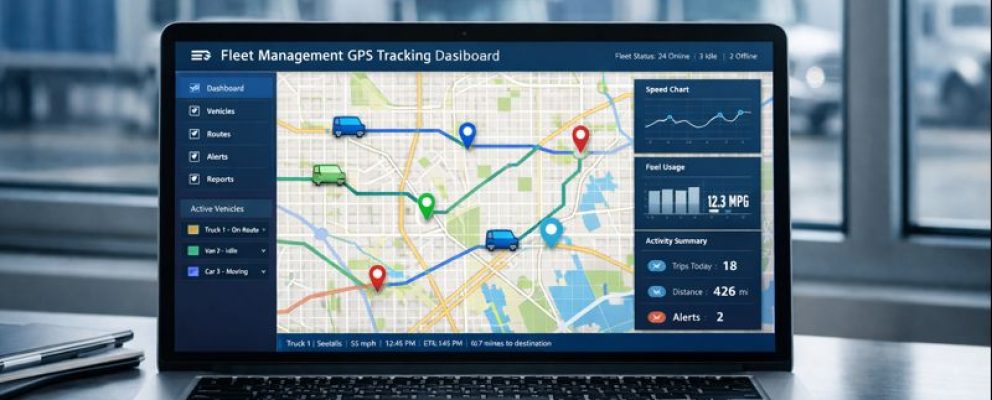
GPS tracking generates substantial data volumes that provide limited value without proper analysis and presentation. Enterprise platforms include configurable reporting frameworks that transform raw telematics data into executive dashboards, compliance summary reports, and operational performance scorecards tailored to different stakeholder requirements.
Scheduled automated reporting ensures compliance documentation and performance metrics reach appropriate stakeholders without manual intervention, while ad-hoc query capabilities support investigative analysis during incident reviews or operational troubleshooting.
Multi-Network Deployment for Global Operations
Organizations operating across Australia, New Zealand, North America, Europe, and other geographic markets require GPS tracking platforms that function reliably across diverse mobile network infrastructures. Vehicle tracking depends on continuous cellular connectivity, creating deployment complexity for multinational enterprises managing fleets across Telstra, Optus, Vodafone, AT&T, Verizon, and regional carrier networks.
Unified platforms with multi-carrier support eliminate the need for separate vendor relationships, fragmented management interfaces, and inconsistent feature availability across geographic markets. Corporate fleet managers maintain centralized policy control and consolidated reporting while regional operations teams manage day-to-day vehicle monitoring through consistent user interfaces regardless of underlying network infrastructure.
Governance Frameworks for Successful Implementation
Technology deployment alone does not ensure compliance or operational improvement. Successful enterprise GPS tracking implementations require governance frameworks that define:
Policy Standards: Clear protocols for alert escalation, exception handling, data access permissions, and privacy compliance ensure consistent system use across teams and locations
Training Programs: Driver communication positioning GPS tracking as performance support rather than surveillance mechanisms, plus administrator training on system capabilities and reporting tools
Continuous Improvement Processes: Regular review of compliance metrics, operational KPIs, and system utilization rates identifies optimization opportunities and ensures the platform evolves alongside business requirements
Incident Response Protocols: Documented procedures for investigating GPS data during safety incidents, customer complaints, or regulatory inquiries ensure proper evidence handling and consistent organizational response
Strategic Fleet Management Foundation
GPS tracking technology provides the foundational data infrastructure required for evidence-based fleet management in regulated industries. The transition from reactive, incident-driven operations to proactive, data-informed decision-making begins with comprehensive visibility into vehicle location, utilization, behavior, and maintenance status across distributed assets.
Organizations implementing enterprise-grade fleet GPS tracking gain simultaneous compliance automation, operational control enhancement, and risk mitigation capabilities that transform fleet management from an administrative overhead function into a strategic operational capability supporting business objectives while meeting increasing regulatory accountability requirements.